NOW
Single skills on the arms factories already own. One part, one task, proven on hardware.
Physical AI for contact
Robots can move and pick. They still can't assemble — because assembly is about force, not position. Pixoft turns a part's CAD file into a force-controlled robotic skill, trained entirely in simulation and deployed on the robots factories already own.
Get in touchThe company & the product
Pixoft is a physical-AI company. We build the software that turns a part's CAD file into a force-controlled skill — trained entirely in simulation, running on the robot a factory already owns. One pipeline, many small exact skills, any robot body.
Upload geometry. Get a deployable skill.
No demonstrations, no teleoperation, no data collection on a running line.
real-world demonstrations needed. Contact data is generated, not collected.
clearance of our first hardware insertion — seated on the first attempt, trained only in simulation.
not months: the target from a new CAD file to a working skill.
robot-agnostic by design. Industrial arms today, humanoid hands next.
What we do
Industrial robots are position machines. They go to a coordinate, perfectly, a million times. But assembly is not about coordinates. A pin meets a hole at a slight angle. A connector resists before it clicks. A bearing needs exactly enough force — and no more. People solve this through their fingertips without thinking. Robots don't.
Today the only way around it is an expert who hand-tunes force parameters for one part, on one robot, for weeks. Change the part and the work starts again. That economics is why most contact work was never automated.
Pixoft replaces the expert with a pipeline. We take the part's CAD, rebuild the contact physics in simulation, and let a policy practise the task millions of times — every misalignment, every tolerance, every surface. What comes out is a small, precise, force-controlled skill that runs on the robot the factory already has.
01
You send the part's geometry — the same STEP file your engineers already have. No demonstrations, no teleoperation, no data collection on a running line.
02
We rebuild the contact physics around the part and let a policy practise the task millions of times — across every misalignment and tolerance the line will ever produce.
03
The output is a small, force-controlled skill deployed to the controller of the robot you already own. It adjusts force and position in real time as the part seats.
Use cases
Every contact task has a force signature. We train the robot to reproduce it.
Leaded components placed into circuit boards at production clearance, trained entirely in simulation.
/CLEARANCE 0.3 MM
/REAL-WORLD TRAINING DATA: NONE
/ROBOT: STOCK COBOT
Blind board-to-board and cable connectors that need feel, not sight.
/SIGNAL: FORCE DROP AT CLICK
/VISION: OCCLUDED
/SKILL FAMILY: INSERTION
Bearings, pins and bushings seated to the right force, every time.
/SIGNAL: FORCE RAMP TO PLATEAU
/FAILURE MODE: JAMMING
/SKILL FAMILY: INSERTION
Catching the thread and sensing cross-threading before damage.
/SIGNAL: TORQUE SIGNATURE
/FAILURE MODE: CROSS-THREAD
/SKILL FAMILY: FASTENING
The same contact engine on a new body.
/BODY: MULTI-FINGER HAND
/SAME PIPELINE: CAD → SIM → SKILL
SYNTHETIC CONTACT TRAINING
REAL-TIME FORCE LOOP
6DOF VISION
REINFORCEMENT LEARNING
HARDWARE-AGNOSTIC
Vision
The industry is racing to build a single brain for every robot. It is a beautiful idea, and for the open world it may be the right one. A factory is not the open world. A factory needs this part, in this fixture, seated to this force — ten thousand times a shift, with no surprises. That is a different problem, and it has a different answer: small models, each trained for one family of contact tasks. Cheap to run. Fast to retrain. Each new skill starts from the ones before it.
Skills compound. Every part we train teaches the system something about contact — friction, compliance, how things jam and how they release. Over time the library becomes the product: a contact layer any robot can draw on, whatever its brand or its shape. Industrial arms are where we start, because they are already installed and the work is already there. Humanoids are where it goes. To us a humanoid is one more body that needs to learn to feel.
NOW
Single skills on the arms factories already own. One part, one task, proven on hardware.
NEXT
A growing library, portable across robot brands. Skills in the same family share what they learned, so each new one is faster and cheaper than the last.
THEN
The contact layer for every body that assembles something — arms, mobile manipulators, humanoid hands.
Force is the missing sense
Vision tells a robot where a part is. Only force tells it how the part goes in.
Simulation over demonstration
Data you collect by hand doesn't scale. Data you can generate does.
Small skills over one giant model
A factory doesn't need a robot that can do anything. It needs one that does this task, every time.
Robot-agnostic
Arms today, humanoids next.
Our goal: hand a robot a new part, and have it assembled within days.
Team
People who have built the systems, companies and industrial networks that make contact useful.
Core team

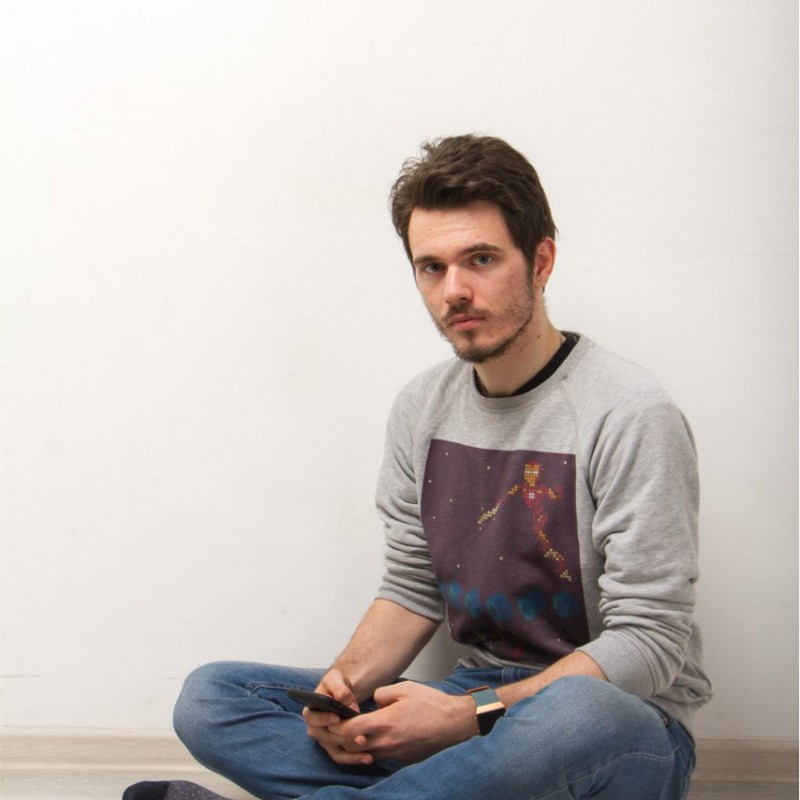
Co-Founder & CEO
Fifth company. MSc in machine learning; bootstrapped an AI services business to a 50-person team.

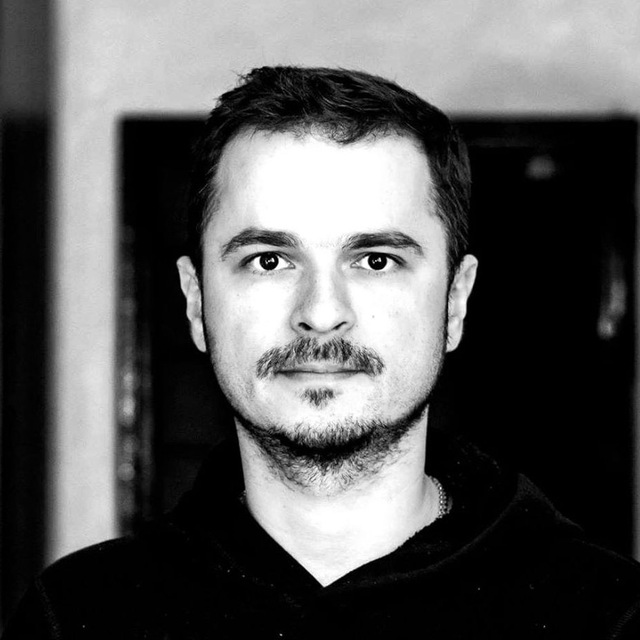
Co-Founder & COO
Ex-CEO OLX Autos Poland. Scaled Bolt Poland into Bolt's largest European market.
Founding team & advisors



Integration Partner · CEO, Blumenbecker Ukraine
Backed by angels & operators from
Partners
Contact
Manufacturers, robot makers, investors — write to us.